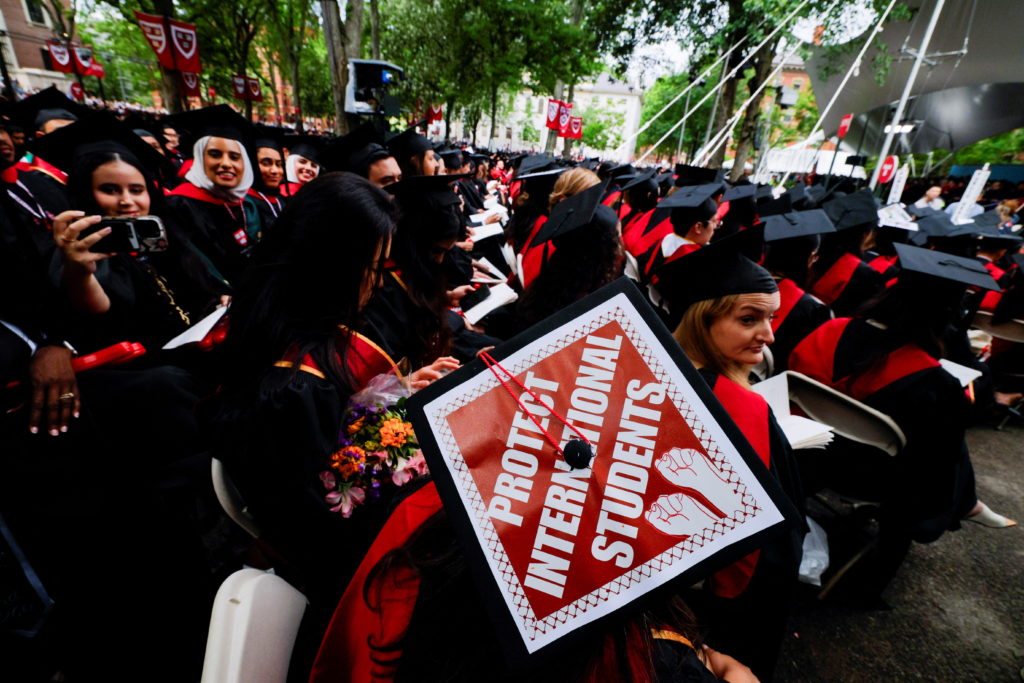
The Trump administration's recent policies targeting international students, including a proposed $70,000 fee for those seeking to work in the U.S. after graduation, have raised concerns about their potential economic impact. Fanta Aw, CEO of NAFSA, remarked on the unprecedented nature of these policies, describing them as direct attacks on international students.
In his second term, President Donald Trump has intensified scrutiny for student visas, revoked the legal status of thousands of students, and sought to limit the duration of student visas. Additionally, the administration has raised fees and imposed stricter regulations on H-1B employment visas, which many international students rely on to remain in the U.S. after completing their studies.
Tara Watson, a senior fellow at the Brookings Institution, suggested that the administration's goal appears to be reducing the foreign-born population in the U.S. These restrictive measures have led to significant declines in international student enrollment, with a preliminary analysis by NAFSA predicting a drop of 111,000 students by 2026, resulting in an estimated loss of $3.4 billion in revenue.
The Department of Homeland Security has justified these policies by stating they are necessary to prioritize American interests and protect domestic workers. However, experts argue that these measures contradict Trump's previous assurances of supporting legal immigration and could deter skilled international talent from coming to the U.S.
Historically, the U.S. has been a leading destination for international students, who contribute significantly to the economy by paying full tuition and filling critical roles in the workforce. Ted Mitchell, president of the American Council on Education, emphasized that international students do not take opportunities away from U.S. citizens but rather enhance the educational landscape.
The long-term effects of these policies could hinder innovation and economic growth, as fewer skilled workers may lead to a decline in new inventions and businesses. Experts warn that if the U.S. continues to impose such restrictions, it risks losing its status as a premier destination for global talent, with other countries poised to capitalize on this shift.




Join the conversation
Reader comments 0
No comments yet. Be the first to share your thoughts.