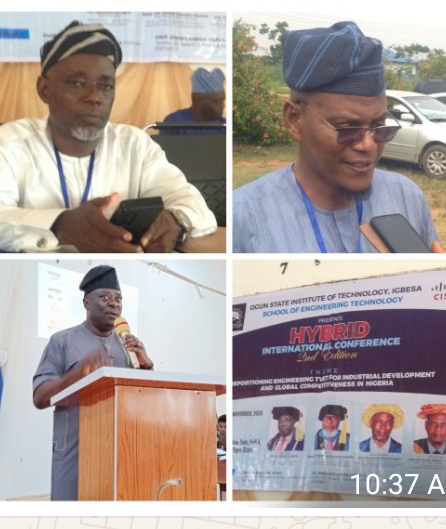
Stakeholders in Technical and Vocational Education and Training (TVET) have emphasized the need for stronger collaboration among tertiary institutions, industries, and government to better equip Nigerian graduates with practical skills essential for industrial development and global competitiveness. This call was made during the second hybrid International Engineering Conference organized by the School of Engineering Technology at the Ogun State Institute of Technology (OGITECH) in Igbesa.
The conference, themed "Repositioning Engineering TVET for Industrial Development and Global Competitiveness in Nigeria," featured a keynote address by Prof. Kazeem Adebiyi from the Department of Mechanical Engineering at Ladoke Akintola University of Technology. He highlighted the importance of engineering TVET as a link between scientific knowledge and practical applications. Adebiyi urged a shift from a certificate-driven education system to one that prioritizes competence, innovation, and practical skills.
He pointed out several challenges facing Nigeria's TVET system, including inadequate industry-academia collaboration, outdated curricula, and ineffective teaching methods. Adebiyi advocated for industry-driven curricula that align with the needs of the industrial sector and encouraged institutions to forge stronger partnerships with businesses to enhance students' practical experiences.
Additionally, he noted the industrial environment in Igbesa as a significant advantage for OGITECH, given the presence of numerous manufacturing companies. Adebiyi also called for engagement with the informal sector to promote skills acquisition and economic development, emphasizing the need for competence, collaboration, curriculum development, and continuous faculty training.
Mr. Taofiq Abdul-Hameed, the lead speaker and former Rector of Federal Polytechnic, Ayede, echoed the sentiment that Nigeria's industrial development relies on effective partnerships among polytechnics, industries, and government. He identified poor policy implementation, inadequate government funding, and weaknesses in accreditation processes as significant challenges in technical education. Abdul-Hameed raised concerns about irregularities in the Students Industrial Work Experience Scheme (SIWES), urging regulatory agencies to enhance monitoring and ensure compliance with accreditation standards.
Dr. Abiodun Oluseye, the Rector of OGITECH, highlighted the institution's commitment to strengthening its academic environment through various initiatives, including conferences and workshops. He noted that this development agenda extends beyond infrastructure and technical skills to encompass the intellectual and professional growth of both students and staff.
Dr. Dauda Folarin, Dean of the School of Engineering Technology, stated that the conference aimed to demonstrate OGITECH's commitment to TVET and foster collaboration with industries, providing a platform to showcase innovative products developed by students and staff. He urged industries to recognize and partner with academic institutions on locally developed solutions.





Join the conversation
Reader comments 0
No comments yet. Be the first to share your thoughts.